
Drop-in daycare vs. babysitter: which is right for you?
Sitters and drop-in centers solve the same problem in very different ways. A practical look at cost, reliability, oversight, and which one fits the day you are actually planning.
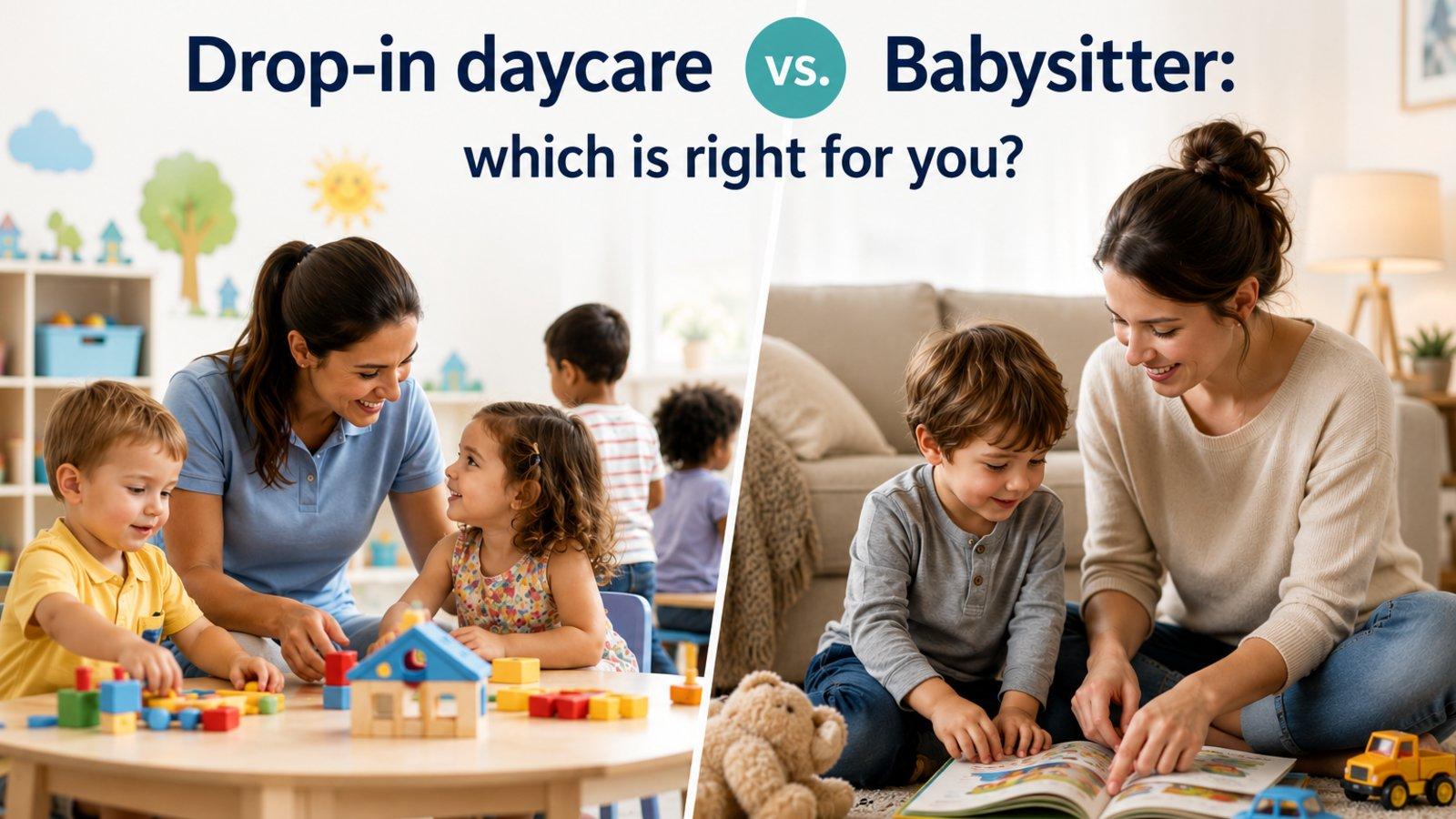
Both options solve the same problem: you need someone to look after your child for a few hours, and you need it to be safe. They solve it in very different ways, and the honest answer is that most families end up using both. The useful question is not which one is better in general. It is which one fits the day you are actually planning.
What each one actually is
A babysitter comes to your home. One adult, your space, your routine, your snacks. You arrange it directly, you set the hours, and you pay by the hour. Sitters are not licensed or inspected by anyone, so the vetting is entirely yours to do.
Drop-in daycare is a licensed childcare center that takes bookings by the session rather than only by the month. Your child joins a room with other children and the staff who are already there. The center holds a state license, which means it is subject to the same ratios, background requirements, and inspections as any full-time program in that state.
Cost works differently, not just differently sized
Sitter pricing is hourly and tends to climb: later nights, multiple children, holidays, and short notice all push the rate up. A short afternoon can end up costing more than you expected once you add the minimum hours many sitters ask for.
Drop-in pricing is per session. You book a full day, a half day, or an evening where the center offers one, and you know the total before you commit. A full day of licensed care often costs less than an afternoon of babysitting, though this varies a lot by city and by center.
The more useful difference is predictability. With a session price you can plan a month of Tuesdays. With an hourly rate you are estimating.
Reliability when something goes wrong
This is where the two options separate most sharply.
If your sitter gets sick, you have no childcare. There is no backup, and you are making calls at seven in the morning.
A center has staff. If one teacher is out, another covers the room. The building opens whether or not any particular person is having a bad week. For anything you genuinely cannot miss, a court date, a flight, a first day at a new job, that difference matters more than price.
Oversight and who is checking
Licensed centers are inspected. States set staff-to-child ratios, require licensing for the facility, and keep records that are usually public. On DropIn, every center is checked against its state licensing registry before it can take bookings, and you can see its license status on its profile.
With a sitter, you are the entire quality control process. Plenty of people do this well, through references, trial afternoons, and word of mouth in a neighborhood group. It is simply work that falls to you, and it does not transfer if you need someone new on short notice.
What your child actually does
A sitter usually means your child stays home and does roughly what they do at home, with one adult paying attention to them. For a shy child, a toddler mid-transition, or a day when someone is under the weather, that familiarity is genuinely valuable.
A center means other children, a room set up for play, and a day with some shape to it. For a child who is home a lot, especially an only child or one not yet in a regular program, a few hours of other kids can be the whole point rather than a side effect.
When a sitter is the better call
Pick a sitter when:
- The care happens at night, especially after bedtime.
- Your child is mildly unwell. Centers exclude sick children, and reasonably so.
- You have several children of different ages and moving them all is more trouble than it is worth.
- You are going out locally and want your child asleep in their own bed.
- The timing is unusual and short, like ninety minutes on a weekday morning.
When drop-in daycare is the better call
Pick a center when:
- You need the care to definitely happen.
- You want a known price before you commit.
- The block is a full working day or most of one.
- Your child would benefit from other children and a bit of structure.
- You want licensed oversight rather than doing the vetting yourself.
A quick way to decide
| If the day is... | Lean toward |
|---|---|
| An evening out after bedtime | Babysitter |
| A full workday you cannot move | Drop-in daycare |
| A sick day at home | Babysitter |
| A stretch of focused work at home | Drop-in daycare |
| Several kids, short notice, at home | Babysitter |
| Something you need to be certain about | Drop-in daycare |
How booking a drop-in day actually works
DropIn is not a directory that hands you a phone number and wishes you luck. You search by where you are, see which licensed centers near you have space for the session you want, and book and pay in the app. Check-in at the door is a QR code rather than a clipboard, and you get photos and updates through the day, plus a note when it is time for pickup.
If you have only ever arranged childcare by text message and hope, that is the part worth trying once. Not because sitters are bad, but because knowing at nine in the evening that tomorrow is handled is a different feeling than hoping someone replies.
- drop-in daycare
- babysitter
- childcare costs
- comparison